(450) 467-2224

5 Signs It’s Time to Replace Your Old Forklift
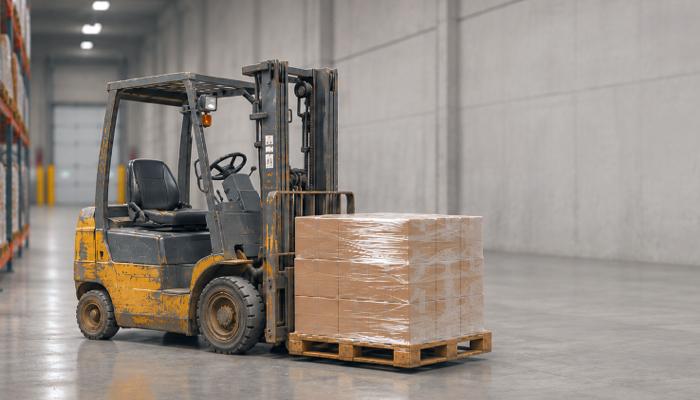
A forklift is an essential piece of equipment in any warehouse, factory, or distribution center. When it runs smoothly, it boosts productivity, streamlines material handling, and reduces manual effort.
Over time, however, a forklift can lose performance. Even if it is still operational, it may become less reliable, more expensive to maintain, or poorly suited to your current operations.
Before investing in new equipment, it is important to recognize the warning signs that indicate a replacement might be necessary. Depending on your situation, the best solution could be a new forklift, a certified used model, a rental, or a better-suited maintenance program.
At A1 Machinery, you can compare different forklift models and get expert advice to choose the most practical option for your business.
Repairs are becoming too frequent
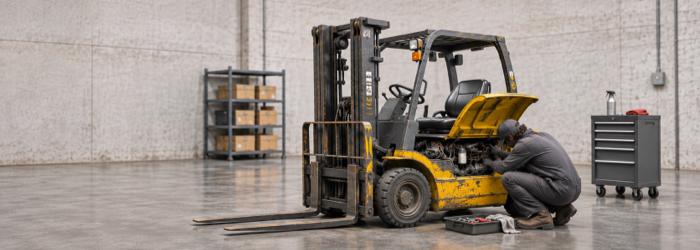
Regular maintenance is normal for any forklift. However, if repairs are becoming increasingly frequent, it may signal that the equipment is reaching the end of its service life.
Keep an eye out for these warning signs:
- Repeated breakdowns
- Recurring hydraulic issues
- Brakes requiring frequent adjustments
- Declining battery or engine performance
- Frequent leaks
- Hard-to-find replacement parts
- Rising repair bills
At a certain point, continuing to patch up an old forklift costs more than replacing it. It pays to compare your ongoing repair expenses against the cost of a newer or better-suited machine.
To extend the lifespan of your fleet, you can also explore our forklift maintenance and repair services.
The Forklift Is Slowing Down Your Operations
A forklift might still run, yet fail to keep up with the pace of your business. When it slows down your workflow, it directly impacts your team's productivity.
This often looks like:
- Slower travel speeds
- Unplanned downtime
- Insufficient lifting capacity
- Delays in order picking and fulfillment
- Employees having to work around the machine's limitations
- Reduced efficiency during peak periods
If your forklift can no longer keep pace with your warehouse, it may be time to evaluate your options. A newer model properly sized and matched to your workspace can save valuable time every day.
Safety Is Becoming a Concern
Safety must always come first. An aging forklift can pose a serious hazard if it shows signs of heavy wear or recurring mechanical issues.
Watch closely for:
- Less responsive brakes
- Loose or imprecise steering
- Heavily worn tires
- Damaged forks
- An unstable mast
- Unusual noises
- Hydraulic leaks
- Stability issues
If these problems persist despite regular servicing, replacing the unit is the safest call. Reliable equipment protects your operators, staff, inventory, and facility.
To reinforce best practices on the floor, check out our guide: 11 tips for operating a forklift safely.
Your operational needs have changed
A forklift that was a perfect fit when you bought it might fall short a few years later. Business requirements evolve alongside order volumes, warehouse layouts, and the types of goods you handle.
Your current forklift may no longer be the right fit if:
- Your loads are heavier than they used to be
- Your pallets are bulkier
- Your aisles are narrower
- Your racking systems are taller
- You are using the machine more intensively
- Your operations now span both indoor and outdoor environments
- Your workflows require greater speed or precision
In these cases, the issue isn't just the age of the forklift it's that it no longer matches your day-to-day reality.
To better understand your options, read our article: Types of forklifts and their applications.
The total cost is getting too high
The upfront price of a replacement can seem steep. However, you also need to factor in the true cost of keeping an old forklift in service.
Be sure to calculate:
- Repeated repair bills
- Costly downtime
- Lost productivity
- Higher routine maintenance expenses
- Excessive fuel or energy consumption
- Safety and compliance risks
- Difficulty sourcing parts
- Operational disruptions
When total ownership costs climb too high, replacing the unit is often more cost-effective in the long run. In some cases, renting is also a smart alternative especially for temporary, seasonal, or peak-demand needs.
To weigh that option, visit our forklift rental page.
Replacing doesn't always mean buying new
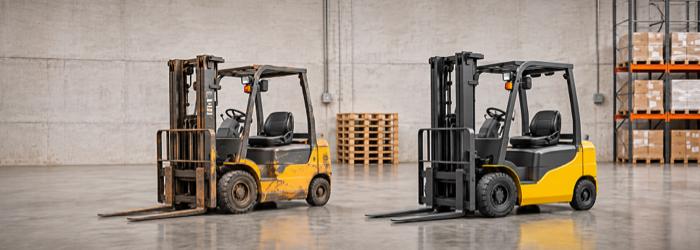
Replacing an aging forklift doesn't automatically mean purchasing a brand-new machine. The real goal is finding the solution that best aligns with your budget, operations, and usage frequency.
Depending on your needs, you might consider:
- A new forklift for heavy, continuous use
- An inspected used forklift for strong value on a tighter budget
- A rental for short-term or seasonal demand
- Upgraded maintenance if the current unit still has viable life left
- A different model if your warehouse layout or load requirements have shifted
What matters most is basing your decision on real operating costs, actual usage levels, and strict safety standards.
Conclusion
An old forklift may still run, but that doesn't mean it remains profitable, safe, or suited to your operations.
If repairs are piling up, workflows are dragging, safety is at risk, your operational needs have evolved, or total costs are climbing, it may be time to explore your options.
Ready to compare available solutions? Browse the forklift inventory at A1 Machinery or contact an advisor to find the best equipment for your business.